Stuck at the Starting Line
Can you think of something you’ve been meaning to start but haven’t gotten around to? Maybe it’s exercising more, drinking less alcohol, or improving your sleep schedule. You know it would benefit you. You’ve thought about it extensively. You want to do it.
But you haven’t. Why not?
Many obstacles can prevent us from acting, but one that consistently works against us all is fear. Fear of the unfamiliar.
Trading the Known for the Unknown
We crave familiarity because it takes the edge off the brutal reality that we don’t know what’s going to happen next. Next year, or in the next 5 minutes. Familiarity feels good. It’s predictable.
Change, by definition, requires introducing uncertainty to something previously known. That creates fear. We haven’t yet experienced the benefits change might bring, but we clearly understand what’s being taken away.
We’re giving something up without fully knowing what we’ll get in return. That’s scary.
Risky Business
Let’s say you want to quit or dramatically reduce your drinking. On the surface, the benefits are obvious: improved sleep, less anxiety, better health, and more.
But beneath the surface are fears of what that looks like on the other side:
“What will I do at parties?”
“What if I feel more stressed out?”
“What will my friends say?”
You’re not just afraid of giving up alcohol, you’re afraid of losing your social identity, your coping mechanism, and a sense of who you are.
It might take time before you see any gains from quitting, but the loss will be immediate. It feels risky and vulnerable.
The loss would be immediate, the gains would take time.
The same pattern exists with other changes we might consider, like improving our diet or starting an exercise routine. There are benefits that exist in the future, but they’re abstract.
What we have to give up is real. It’s now.
Red Light or Yellow Light?
When the losses feel real but the gains are abstract, fear tells us to stay put. The risk doesn’t seem worth the reward.
But not all fear is equal.
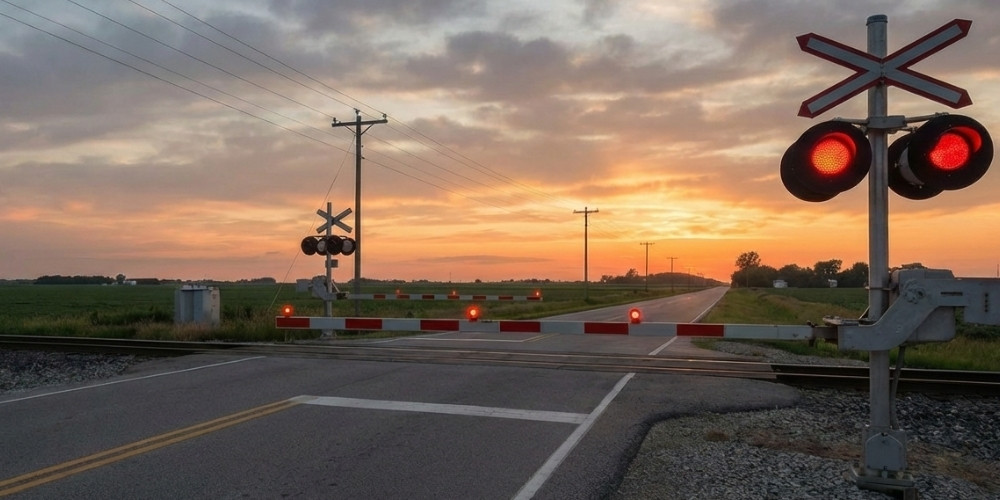
Some fears are bright red lights with closed gates at a railroad crossing—legitimate warnings meant to keep us safe. Other are flashing yellow lights as we approach an intersection, signaling caution and awareness before continuing on.
The problem arises when we treat every yellow light like a red one. We end up stuck at the intersection, afraid to move even when the coast is clear.
Instead of cars honking behind us, we become frustrated with ourselves for not being able to find the gas pedal.
Name Your Fear
So how do you identify the fear that’s stopping you? Ask yourself three questions:
- What change am I reluctant to make?
- What will I be giving up if I made this change?
- What am I afraid will happen?
Sometimes simply naming the fear is enough. Once you drag it into the light and look at it directly, it loses some of its power.
“I’m afraid I’ll be boring without alcohol.”
Okay. There it is. What happens then?
Even if naming your fear doesn’t eliminate it completely, at least you’ll know what you’re dealing with. That’s the first step toward moving past it. Instead of criticizing yourself for inaction, you can develop an understanding of why you’re hesitant to act.
The yellow light is flashing right in front of you. Is it safe to cross?
Fear Isn’t Bad, but It Isn’t Always Right
Fear isn’t the enemy. It’s an evolutionary tool that often protects us. But sometimes it protects us from the wrong things.
Fear’s job is to warn us when something’s at risk. It alerts us to avoid loss. It doesn’t necessarily steer us toward gains. On the contrary, sometimes it keeps us from making the very changes that would improve our lives.
The next time you find yourself stuck at the starting line, pause. Ask what you’re afraid of. Name it. Look at it directly. Then decide: is this fear protecting me, or is it just keeping me comfortable?
Sometimes the most dangerous thing we can do is stay exactly where we are.
As always, thanks for reading. I’m truly happy you’re here.
All the best,
Nate