
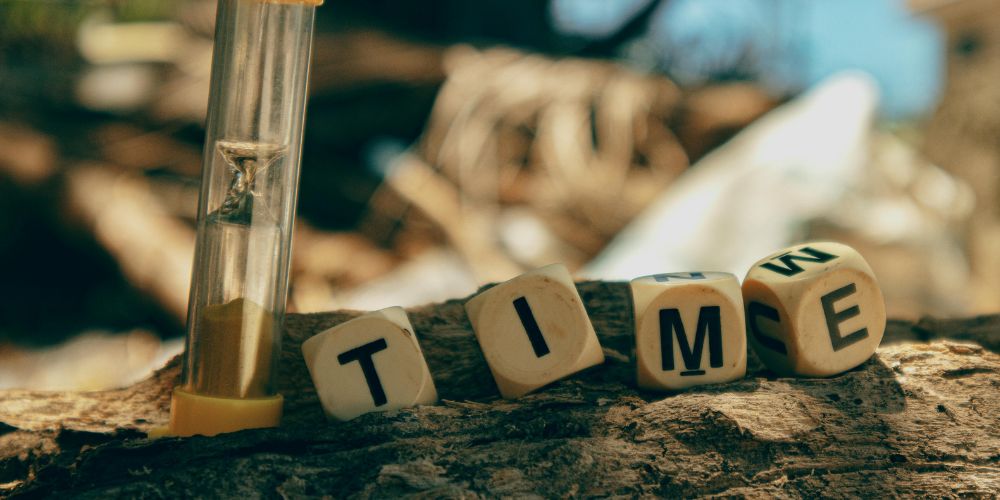
Lazy Afternoon
Saturday afternoon. The to-do list is checked off, you’re rested, and the calendar is cleared. Now it’s your time. Free time.
You’ve got a list of things in the back of your mind that you’re saving for a day like this. But before you know it, the afternoon is gone and you never got around to any of it. Somehow, the hours evaporated, and you don’t feel like you used them well.
When you look back, you can identify some scroll time, a little fumbling around the kitchen, and time sorting through the mail. But nothing significant.
Where did the hours go?
Not What You Think
We’ve all been there. Free time is supposed to be fun and easy, yet somehow, we end up feeling disappointed that we didn’t use it right.
We assume the problem is that we’re lazy or undisciplined. Maybe we need to get better about planning our day or identifying a goal to work toward. More scheduling. More structure.
Maybe we’re just not responsible enough to handle free time without wasting it.
But before blaming yourself for wasting time, consider what you actually did with it, and why. Maybe your behavior is less a personal failure and more predictable than it seems.
Rolling Downhill
When the hours get away from us like this, what we’re doing is following the path of least resistance. That’s why it feels mindless. It’s not a character flaw; it’s a logical behavior. Not much different than a ball rolling downhill.
We’re wired to conserve energy and avoid uncertainty. Starting something new, especially something that takes mental or physical effort, requires us to cross a threshold. It’s a line in the sand between the safe zone and uncertainty or discomfort.
For our brains, it’s an easy choice.
Any mindless or comforting activity keeps us squarely on one side of this line. The hours don’t evaporate. We stay busy avoiding anything that requires risk or discomfort.
It’s a choice, just not a conscious one.
It’s not a character flaw, it’s logical behavior.
The Safe Bet
The behaviors we default to when the hours get away from us tell us a lot about why we choose them. They are usually easy to access, with a known outcome, and often include a bit of dopamine. In short, they give us exactly what we want: comfort, security, and pleasure.
The book you want to read? You might enjoy it, but maybe it will be a bust and your time is wasted.
The new recipe? Might be a lot of work and not even that good.
The project? Maybe you’ll fail.
What you’re bumping up against isn’t laziness—it’s resistance. Anything that requires effort or discomfort with an unknown outcome is perceived as a risk. Your system is designed to avoid it.
The Threshold
Letting the hours slip away isn’t a “you” trait—it’s a human trait. Much of what surrounds us is designed to remove some form of resistance.
That’s why we choose it.
Even the most disciplined person you know deals with this. They’ve just developed tactics that enable them to cross the threshold despite resistance—repeatedly and reliably.
They still struggle with it. The difference is the tactics, not the wiring. That’s worth remembering the next time an afternoon slips away.
When free time opens up, you don’t need a rigid plan. If you notice the pull toward the low-stakes option, that’s not a failure — it’s the path of least resistance doing exactly what you’d expect it to do.
If you follow it, you’ll understand why.
If you don’t, you’ll know to expect a little resistance when you choose to cross the threshold anyway.
As always, thanks for reading. I’m truly happy you’re here.
All the best,
Nate