
Stopped Every Time
In the back of our minds is an ever-growing list of changes we intend to make. Some are consciously nagging at us, others persist beneath the surface. Then there’s the one you’re on the brink of making. Maybe even tried a few times. But every time, something stops you. It’s not dramatic or overt, but it’s definite.
At the decision point, your options feel binary: plow ahead recklessly or stand down. Neither decision feels right.
Imaginary or Impassable
The confusion is legitimate and common. We expect resistance to be large and obvious. Walls and moats. Either that, or it’s all in our head.
We’ve been told both.
We’re either making up our obstacles and we need to just get over it, or the obstacle is real and insurmountable. This framing leaves us feeling like we’ve only got two options: reckless collision or permanent avoidance.
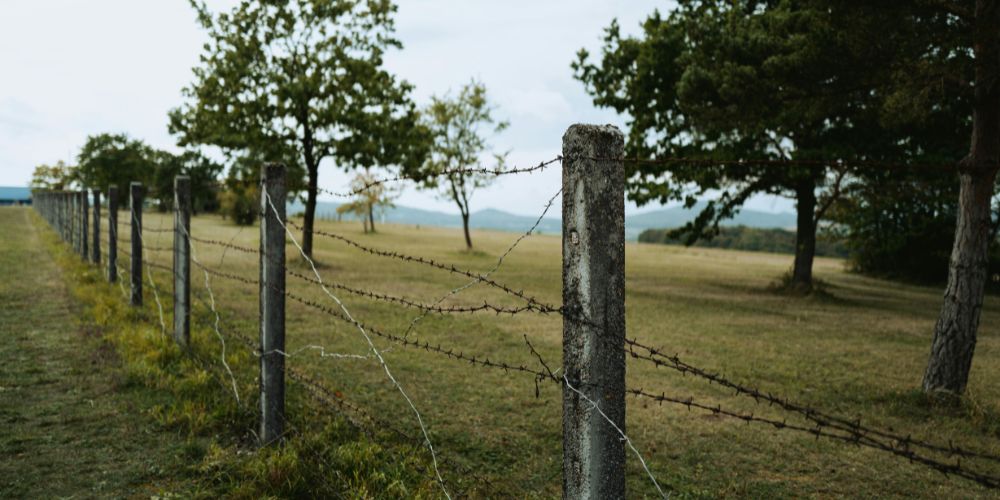
What if the obstacle you’re facing isn’t imaginary nor impassable? What if it’s more like a barbed wire fence—real, purposeful, but navigable?
Elegant Yet Brutal
Barbed wire is one of the most effective boundaries ever created. Elegant yet brutal. Posts, wire, and barbs—with a lot of open space in between. It’s almost invisible at a distance.
Unlike a fortress wall, the fence doesn’t deter with size. It deters with precision. If you ignore it, there are real costs, but it’s not designed to stop you permanently. It defines a boundary, keeping something in and something out. Knowing what it’s keeping in and keeping out changes everything about how you approach it.
Getting around a barbed wire fence doesn’t require brute force. In fact, that’s exactly what it’s best at stopping. It requires perception and strategy. You have to see what it is, where it runs, and why it’s there before you can decide if and how to navigate it.
It’s not imaginary. It’s a real obstacle with a purpose. Recklessness gets you hurt. Overstating it keeps you permanently on one side.
It’s not a moat, it’s mostly air. But the barbs are real so you have to be careful where you grab.
Gates and Stiles
Fences around change weren’t put there by chances or bad luck. They were constructed post by post to protect something or defend against something. It’s not a threat to defeat, but a boundary marker erected by a part of you with legitimate concerns.
If you’re the farmer and you built the fence, you aren’t restricted to stay on one side or the other. The farmer knows where the gates and stiles are. But to the livestock, the fence is impenetrable. It protects them from predators, but it also prevents them from ever roaming freely.
So who built our fences? Are we the farmer or the livestock? The farmer knows the value of the fence while still being able to use the gates. The livestock only know the barbs hurt.
Mostly Air
You don’t need to attack the fence, or scramble over it only to arrive with scrapes and cuts. You can look at it first, identify where it runs, and consider what it’s keeping in and what it’s defending against. Where are the gates or the gaps?
That’s not avoidance, that’s perception.
The goal isn’t to pretend the fence isn’t there, but to acknowledge what it is and what it isn’t. It’s not a moat, it’s mostly air. But the barbs are real so you have to be careful where you grab.
From a distance, fences make a farm picturesque. Dividing it into neat little sections. They give it structure and a sense of order. The livestock can roam freely in their protected areas, and the farmer rests easy at night knowing his animals are safe.
In the morning, he can go anywhere he needs to. After all, he built the fence. And he knows how to use every gate.
As always, thanks for reading. I’m truly happy you’re here.
All the best,
Nate