Speed Solitaire
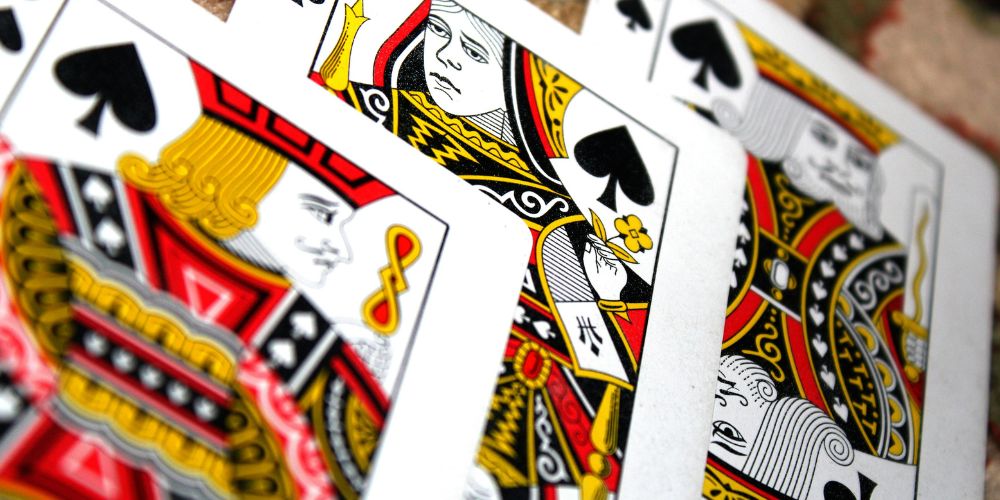
I’ve been playing a lot of solitaire on my phone lately. It wasn’t planned. My wife and I recently had a couple of long travel days, and I knew we’d be without cell service for part of it, so I downloaded some books, podcasts, and a few mindless games to pass the time.
Over the course of two days, the solitaire game bubbled to the top of my activity list. It was quick, easy, and fun. It wasn’t much of a commitment to start a new game—just a couple of minutes. And early on, I kept breaking my records.
Not just solitaire—speed solitaire. Who knew?
Just Because
That was a couple of months ago, but I’m still playing. Not all the time, just when I have a few minutes to kill. Waiting for Amanda to get ready before we leave for dinner, or while my oatmeal heats up.
A quick game of solitaire here or there.
This behavior jumps out at me because it’s a new one, but I do the same thing with other activities too. Apple News, for example. I open it when there’s a spare minute, not because something important is happening, just because. I also drink seltzers when I’m not thirsty and eat snacks when I’m not hungry.
With all these little patterns, it’s not the behaviors themselves that catch my attention—but when I do them. It’s in empty minutes. Unstructured time. A small gap opens, and without thinking about it I reach for something to consume, even just momentarily. Not because I particularly want it, but because it’s what I do.
The thing itself is almost beside the point. Anything seems better than nothing.
Incremental Consumption
Fortunately, there’s no game counter on my solitaire app. But, if I had to guess, I’ve played hundreds of games. Maybe more than a thousand? I have no idea. Because I never dedicate time to sit down and “play solitaire”—it’s just a couple games in spare moments.
The time isn’t allocated, it’s captured. A few minutes at a time.
Individual games are quick, but the pattern running across weeks and months adds up. It’s not about whether I should stop playing, but whether I’m choosing to play in the first place.
And that’s just solitaire. If I add in other automatic activities, it’s even more. Whether it’s time, calories, substances, or media, the consumption accumulates. Eventually it shapes how we pass our time. Mostly without us even noticing.
The Default
When I used to drink, the pattern was obvious. The pull to alcohol in unclaimed time is one of its defining characteristics. And with substances there are a lot of other physiological and psychological forces at play. What’s surprised me more is how easy it is to drift into similar behavior patterns with almost anything else.
But if I’m not seeking a buzz, what am I seeking?
Why is the urge to do something usually stronger than the ability to do nothing?
Solitaire, seltzer, news, chocolate—they’re almost interchangeable. When the alternative is nothing, anything becomes the default. The default becomes a routine—a few games of solitaire on the plane becomes thousands. A large part of “who we are” might be shaped by the subconscious patterns we develop simply to avoid doing nothing.
When the alternative is nothing, anything becomes the default.
A Moment Between
Thinking about my behavior patterns like this makes me realize how much of it happens on autopilot. When there’s a gap, it gets filled with any number of default behaviors I have at my disposal.
When I hit publish on this newsletter, I’ll probably reach for a game of solitaire. Or a seltzer. But before I do, I might sit in that minute between finishing this and starting that, just to see what’s there.
As always, thanks for reading. I’m truly happy you’re here.
All the best,
Nate