Swings and Misses
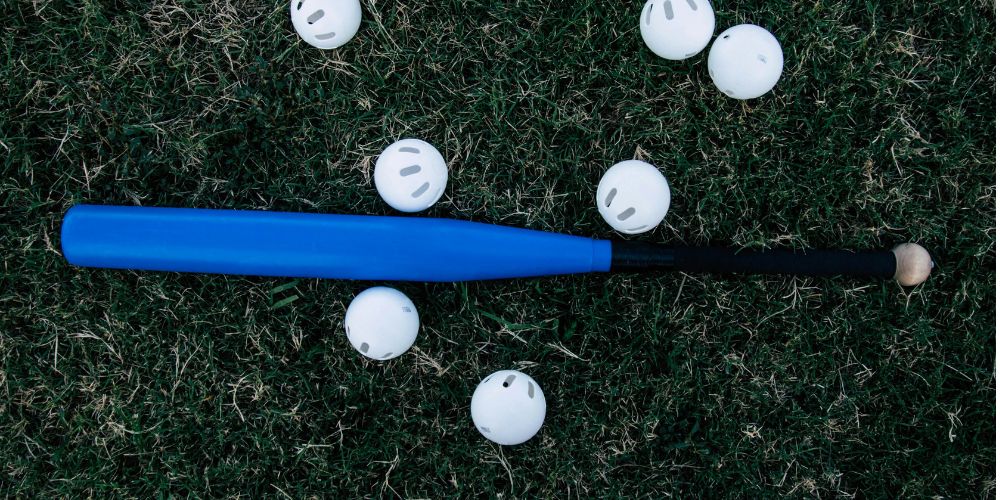
I helped my 4-year-old niece work on her whiffle tee-ball swing last weekend. I have to admit, she wasn’t very good at it. Sometimes she’d smash the tee itself, knocking the whole thing loose. Other times she’d whiff entirely, nearly spinning herself to the ground. Her feet were in a terrible stance, and it was different every swing. Her form was awful.
The most striking thing about tee-ball practice though, was that she didn’t care about any of that. She was having a blast. She may have had more fun when she hit the tee instead of the ball. At least, that was when she laughed the hardest.
Form Over Fun
As adults, we approach the whole thing differently. For us, whiffle ball tee-ball practice is about gripping the bat properly, having a good stance, and making contact with the ball. We’re not trying to get up there and look like fools (oversized plastic bat notwithstanding), we’re there to demonstrate our abilities. Our competence.
Even in something as insignificant as whiffle ball tee-ball, we’ve got an image to manage. We might not notice it, but we’re performing, slightly. Why? Because we don’t want to look bad doing it. Whatever “it” is.
If we don’t know what we’re doing, we’re going to get up there and act like we do. Whiffle ball tee-ball? Oh yeah, I had a promising career in that when I was young.
“Watch this.”
Pain, Not Pride
In the context of tee-ball, this seems silly. But we know this kind of performance is present in the rest of our lives as well. We just don’t want to look incompetent. Why?
Because it hurts.
It doesn’t hurt to not know how, it hurts that other people notice. It hurts when we think they think less of us because of it. We don’t actually have to know what they think, what we assume they think is enough. So that desire to look like we know what we’re doing—or better yet, actually pull it off, isn’t about pride or arrogance. It’s about avoiding the hurt of them thinking otherwise.
We’re wired to avoid what hurts. We build our routines around it. And somewhere along the way—between 4 and 44—we determined that perceived incompetence or lack of knowledge is painful. That it’s a feeling to avoid.
The same instinct that tells us to duck when someone throws a rock at us is telling us to step up to the tee, grip the plastic bat, and rip.
It doesn’t hurt to not know how, it hurts that other people notice.
Humbled, But Unharmed
I’m not implying that kids are fearless. We know they’re not. But their fear is usually reserved for times when they perceive actual danger. A child might be afraid of a dog, or jumping off a wall, or thunder. Those fears are logical: a bite, an injury, the unknown. We’re able to step in as adults and explain that “the dog won’t hurt you” or “it’s only thunder.” And once they feel safe, they’ll move on.
While those fears protect them from real danger, our fears often protect us from imagined danger. If someone discovers we aren’t a good speller, or that we can’t use Excel, we aren’t harmed at all. The only thing that changes is our sense of where we stand. We suddenly feel less than others, or less than who we wish we were. But we’re intact.
What this imagined fear costs in real life is the willingness to try new things, to be the beginner, or to actually not know. The instinct designed to protect us limits us. It becomes interference.
Same Wiring, Different Threat
What struck me playing tee-ball with my niece was that, while my instinct was to help her improve, hers was just to have fun. She wasn’t protecting anything.
If a violent thunderstorm had popped up, or the neighbor dog came charging from across the yard—she would have been scared. Something real would’ve been at risk.
But somewhere between her age and mine, the instinct that’s meant to protect us from actual harm started to respond to more subtle cues.
Same wiring, different threats.
The good news is, most of those threats aren’t real. Which means we can still step up to the tee and take a swing. If we whiff, or blast the tee instead of the ball, after a moment of embarrassment, we’ll realize nothing actually happens.
As always, thanks for reading. I’m truly happy you’re here.
All the best,
Nate